
- This event has passed.
December Public Meeting – EPA Superfund Site Impacts on West Branch Perkiomen Creek + White Elephant Gift Exchange
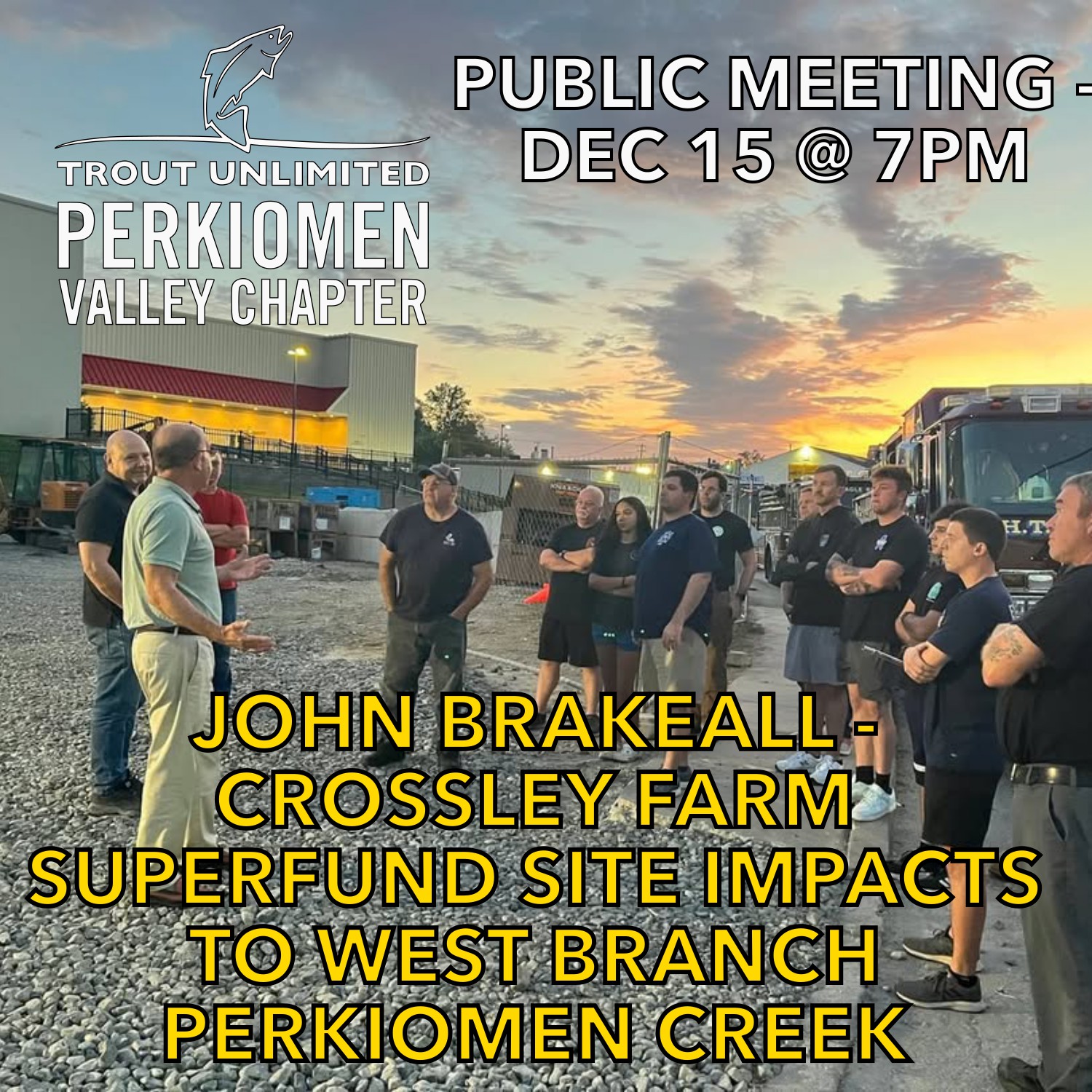
Our presentation this month is with EPA Senior Public Affairs Specialist John Brakeall who will discuss Crossley Farm Superfund Site’s Impacts on the West Branch of Perkiomen Creek. it’s important to know how past misuse of resources affects today’s waterways, and John is an expert in this matter. Also joining will be EPA Biologist Matt Tanyor and EPA Remedial Project Manager Leslee Everett.
You do not have to be a member to attend! Bring a friend!
WHERE & WHEN: Monday, DECEMBER 15, 7pm // Upper Perkiomen Library, Lower Level – 350 Main Street, Red Hill PA 18076
Can’t join us in person? You can watch via Zoom.
Stay after the presentation for some snacks and a group hang!
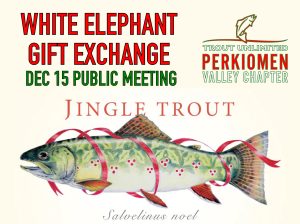
WHITE ELEPHANT GIFT EXCHANGE
Instead of a raffle, we are doing a FISHING-RELATED White Elephant Gift Swap! Open to Everyone! To join in the fun, just bring a wrapped FISHING-RELATED gift (value up to $25). Drinks & Snacks Provided. Feel free to bring your favorite treats to share.
Presentation – John Brakeall – “Presentation on the Crossley Farm Superfund Site and Implications for The West Branch of Perkiomen Creek”
Guest Speakers:
- Leslee Everett, EPA Remedial Project Manager
- Matt Taynor, EPA Biologist
- John Brakeall, EPA Community Involvement Coordinator
The U.S. Environmental Protection Agency (EPA) will provide a presentation on the Crossley Farm Superfund site located in Hereford Township. EPA has led the environmental investigation and decades long remediation of the Crossley Farm Superfund site. Apparently, some 1200 barrels of toxic waste were buried on the Crossley farm property (a hilltop south of Huffs Church, Berks County, Pa) back in the 60’s. In 1983, locals complained of contaminated well water and in ensuing years PA DEP investigated. In the late 80’s, with EPA involvement, a toxic plume in the groundwater was verified, and later lead to sourcing the toxic dump site. The site was classified as a Superfund site which focused monitoring and remediation actions, and which have now been proceeding for almost 40 years. The EPA team will be present to discuss the history of the site, the actions taken to remediate the groundwater contamination with results to date, and Superfund program’s ecological and biological oversight of the site. This should be a very illuminating discussion regarding how EPA Superfund sites are managed. Please join us.